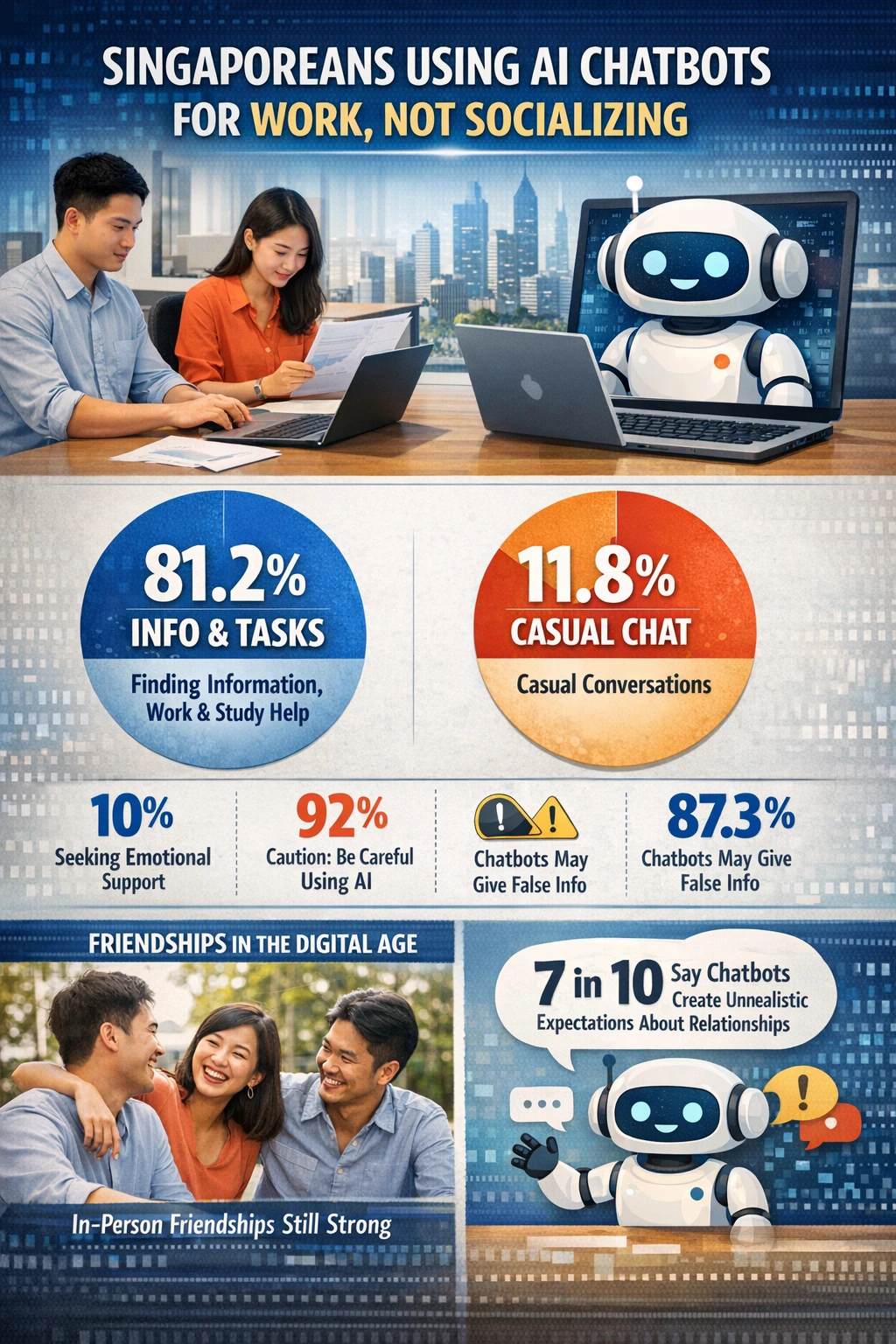
The study, which focuses on friendship in the digital age, surveyed 3,713 people aged 21 and above between October and November 2025. - File photo/
Singaporeans use AI chatbots for work, not socializing - Study
SINGAPORE: Most artificial intelligence (AI) chatbot users in Singapore rely on the technology for practical and informational purposes rather than social or emotional needs, Xinhua reported, citing a new survey.
AI Summary
More than 60% of artificial intelligence (AI) chatbot users in Singapore use the technology for practical and informational purposes.
The majority of survey respondents said that personal friendships are still important in the digital age.
Only a small proportion of AI chatbot users engage in casual conversations or receive emotional support from the technology.
The survey also showed that personal friendships are still strong in the digital age.
More than 60 percent of respondents said they use AI chatbots, according to a survey published on Tuesday by the Institute for Policy Studies at the National University of Singapore.
Key Usage Statistics
- Information Seeking: 81.2% used chatbots to find information, reviews, or recommendations
- Work/School Help: 61% sought help with school or work assignments
- Casual Conversations: Only 11.8% engaged in casual conversations with AI chatbots
- Emotional Support: About 10% sought emotional support or mental health help
The study, which focused on friendships in the digital age, surveyed 3,713 people aged 21 and over between October and November 2025.
User Concerns and Attitudes
Most respondents expressed caution about the technology. More than 92 percent said people should be more careful when using AI chatbots, while 87.3 percent agreed that chatbots can provide misleading information.
Seven in 10 respondents felt that AI chatbots create unrealistic expectations about relationships, making it harder to form relationships and reducing the opportunity to seek help from real people.
Friendship Findings
The study also found that in-person friendships remain strong, with many respondents saying they are meeting all of their close friends in person for the first time.
Study Methodology
This comprehensive survey by the Institute for Policy Studies at the National University of Singapore provides valuable insights into how Singaporeans are integrating AI technology into their daily lives while maintaining traditional social connections.
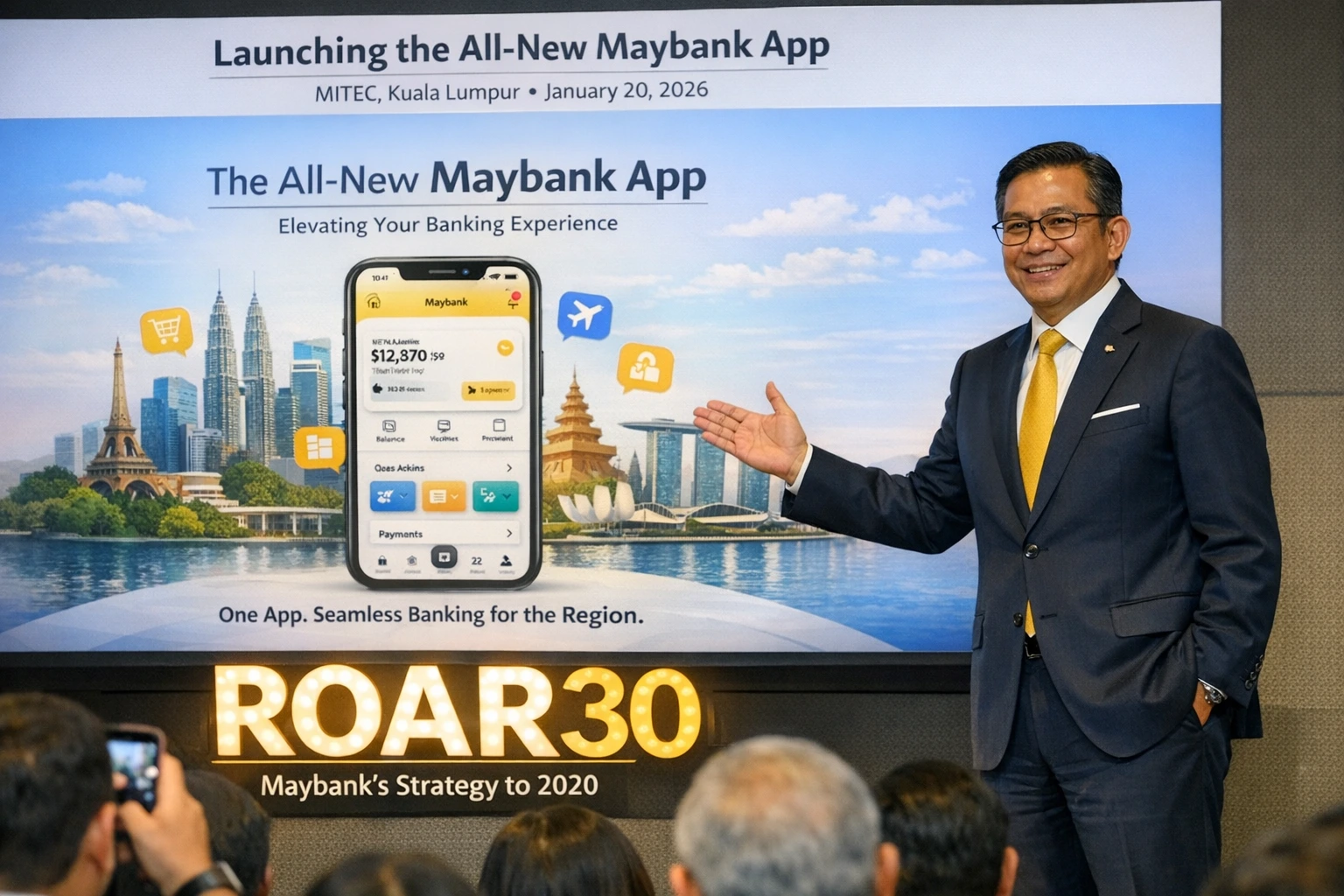
Khairussaleh (right) during a media briefing on Maybank's new five-year strategy at the Malaysia International Trade and Exhibition Centre (MITEC), Kuala Lumpur, Jan 20, 2026.
Maybank plans to introduce new retail banking app to replace MAE
KUALA LUMPUR: Maybank plans to introduce a new retail banking app to replace the existing MAE app, as part of a broader investment in technology to enhance digital capabilities and strengthen customer engagement across the region.
Key Investment Details
Group President and Chief Executive Officer Datuk Seri Khairussaleh Ramli said the new app was part of a RM10 billion technology investment over a five-year period.
He said the new app was aimed at surpassing existing capabilities and would be developed as a single platform to meet the needs of various markets and countries for the group's regional footprint.
CEO Statement
"MAE is good, but there are certain capabilities that we need to implement. We are now focusing on developing for the group and the region. We want to develop a single platform for multiple footprints and countries," he said in a media briefing here yesterday, in conjunction with the launch of ROAR30, Maybank's new five-year strategy to 2030.
Development Strategy
Khairussaleh said the bank's plan was to develop a scalable platform for individual customers that could be used across the region, rather than developing market-specific solutions, to improve efficiency and enhance customer experience.
Rollout Plan
He said Indonesia was likely to be the first market to launch the application, given the importance of digital banking in the country, with Malaysia and Singapore expected to follow soon after.
Business Objectives
Khairussaleh said the new application would support the group's efforts to grow fee-based revenue through improved cross-selling of solutions in the retail segment, while complementing transaction banking and payments capabilities for the non-retail segment.
Strategic Impact
This initiative represents Maybank's commitment to digital transformation and regional expansion, leveraging technology to create a unified banking experience across Southeast Asian markets while driving revenue growth through enhanced digital services.

Walker S2 went viral for its ability to change its own battery pack without human intervention, enabling it to operate continuously with minimal downtime.
Airbus begins testing Walker S2 robot that can change its own battery
Major European aerospace company, Airbus becomes the latest firm to test UBTech's Walker S2 humanoid robot to evaluate its effectiveness working on aircraft assembly floors.
AI Summary
Airbus is testing UBTech's Walker S2 humanoid robot for effectiveness on aircraft assembly floors, after the robot went viral with its ability to change its own battery pack without human intervention.
Airbus's test is an important achievement for Shenzhen-based UBTech, which wants to become a leader in industrial humanoid robots with Walker S2 capable of lifting loads up to 15 kilograms and performing automatic battery changes.
The increased use of humanoid robots in large industrial operations shows the role of more advanced automation in improving productivity, work precision, and worker safety in the aerospace and automotive sectors.
The robot went viral last year after demonstrating its ability to change its own battery pack without human intervention, thus enabling it to operate continuously with minimal downtime.
Airbus's test is seen as another important achievement for UBTech. Previously, companies like Texas Instruments, BYD, and Foxconn have also used Walker S2 in their respective facilities.
Shenzhen-based UBTech is targeting a position as a leader in industrial humanoid robot development.
Each Walker S2 unit, standing 1.76 meters tall, can lift loads up to 15 kilograms and perform automatic battery changes within minutes.
Robot Specifications
- Height: 1.76 meters
- Lifting Capacity: Up to 15 kilograms
- Key Feature: Automatic battery pack changing
- Operation: Continuous with minimal downtime
- Current Users: Airbus, Texas Instruments, BYD, Foxconn
In the industrial robotics sector, Walker S2 is not the only humanoid project being developed.
Competing Humanoid Robots
- Tesla Optimus: Still in early development stages, no commercial customers yet
- Boston Dynamics Atlas: Humanoid robot being used by Hyundai in their factories
- Atlas + DeepMind: Collaboration with Google DeepMind for AI integration through world models
This development shows the increased use of humanoid robots in large-scale industrial operations, with more advanced automation capabilities now becoming a key factor in improving productivity, work precision, and worker safety in complex manufacturing sectors such as aerospace and automotive.
Industry Impact
The integration of humanoid robots like Walker S2 represents a significant advancement in industrial automation, offering continuous operation capabilities and reducing human intervention in complex manufacturing environments.

Microsoft's January 2026 security update causes some Windows 11 devices to fail to shut down or enter hibernation mode.
Windows 11 receives emergency update to address PC shutdown issue
Microsoft issued an emergency update after the January 2026 security update caused some Windows 11 devices to fail to shut down or enter hibernation mode.
AI Summary
Microsoft's January 2026 security update causes some Windows 11 devices to fail to shut down or enter hibernation mode.
The issue is primarily experienced by Windows 11 version 23H2 devices that use Secure Launch, causing automatic reboots when trying to shut down.
In addition, the update also fixes a blank display issue, Outlook Classic issues, and failure of Windows 10 and Windows 11 users to log in remotely.
For affected devices, selecting the shutdown function causes the computer to reboot without prompting.
The issue was detected on Windows 11 version 23H2 devices that use Secure Launch.
In addition to the issue, the update also fixes issues with blank displays, Outlook Classic suddenly stopping, and failure of Windows 10 and Windows 11 users to log in remotely.
Affected Devices & Issues
- Primary Issue: Windows 11 version 23H2 devices using Secure Launch
- Symptom: Automatic reboots when attempting to shut down or enter hibernation
- Additional Fixes: Blank display issue, Outlook Classic problems, remote login failures
- Scope: Affects both Windows 10 and Windows 11 users
Recommendation
Users are advised to update their operating systems immediately to ensure that their devices return to normal operation.
Resolution Steps
- Check for Windows Updates in Settings
- Install the emergency update immediately
- Restart your device after installation
- Verify that shutdown and hibernation functions work properly

A surge in component demand from AI data center sector has caused RAM and SSD prices to increase by more than 40 percent.
Smartphone manufacturers cut device production due to component shortage
A surge in component demand from the AI data center sector has caused RAM and SSD prices to increase by more than 40 percent.
AI Brief
A global memory component shortage is having a major impact on smartphone industry, with Xiaomi, Oppo, Vivo and Transsion expected to reduce device production by between 10 and 20 percent throughout 2026.
A surge in component demand from the AI data center sector has caused RAM and SSD prices to increase by more than 40 percent in a few months.
The data center and AI development sectors are now absorbing a large portion of memory supply, with Wall Street Journal reporting that up to 70 percent of global DRAM production will be used by data centers by 2026.
This situation is adding pressure on consumer device manufacturers that rely on DRAM and NAND supplies for mid-range and affordable smartphones.
According to Chinese media reports, largest production adjustments will involve mid-range and entry-level models, while the focus will be on high-end devices to maintain profit margins amid rising costs.
Although there has been no official announcement from the companies involved, the decision is in line with market analysis that suggests memory supply uncertainty will persist until at least 2029 as priority is given to AI and data center sectors.
Key Points
- Production Reduction: Xiaomi, Oppo, Vivo and Transsion expected to cut production by 10-20%
- Price Surge: RAM and SSD prices increased by over 40% due to AI demand
- AI Impact: Up to 70% of global DRAM production will be used by data centers by 2026
- Market Pressure: Consumer device manufacturers facing supply constraints
- Duration: Memory supply uncertainty expected to persist until at least 2029

Apple will use Google Gemini's artificial intelligence (AI) model for Apple Intelligence after its own efforts did not reach their targets.
Apple Google Artificial Intelligence
Among the shocking news this week is that Apple will use Google Gemini's artificial intelligence (AI) model for Apple Intelligence after its own efforts did not reach their targets.
This morning, a report came out from the Financial Times that said Apple paid Google around $1 billion to use Gemini. Although using Gemini, this model will be operated by Apple itself through their Private Cloud Compute browser to control customer privacy.
This contract for several years is seen as quite profitable because Apple does not have to invest in developing its own model which also requires large investments in building data centers as Google, OpenAI, Microsoft and Meta are doing.
In the same report, OpenAI was also said to have refused to continue cooperation with Apple even though ChatGPT was integrated into Apple Intelligence at an early stage. There is no reason why OpenAI refused but speculation is that they are developing their own AI hardware with the help of Jony Ive. To ensure that there is no conflict of interest, the cooperation with Apple is not continued.
The AI device currently being developed aims to replace the iPhone, perhaps as a smart pen or a necklace that hangs around the neck.
Key Points
- Major Partnership: Apple pays Google $1 billion to use Gemini AI model for Apple Intelligence
- Privacy Control: Model operated through Apple's Private Cloud Compute browser
- Strategic Move: Apple's own AI efforts didn't meet targets, leading to Google partnership
- OpenAI Refusal: OpenAI refused to continue cooperation despite early ChatGPT integration
- Hardware Development: Speculation about AI device development with Jony Ive's help
Industry Impact
This partnership is seen as a major success for Google Gemini in the AI war since OpenAI was not selected. It represents Apple's strategic shift to leverage established AI technology rather than building their own from scratch.
The contract provides Apple with significant cost savings by avoiding the massive investments required for data center development and AI model training that competitors like Google, OpenAI, Microsoft, and Meta are undertaking.
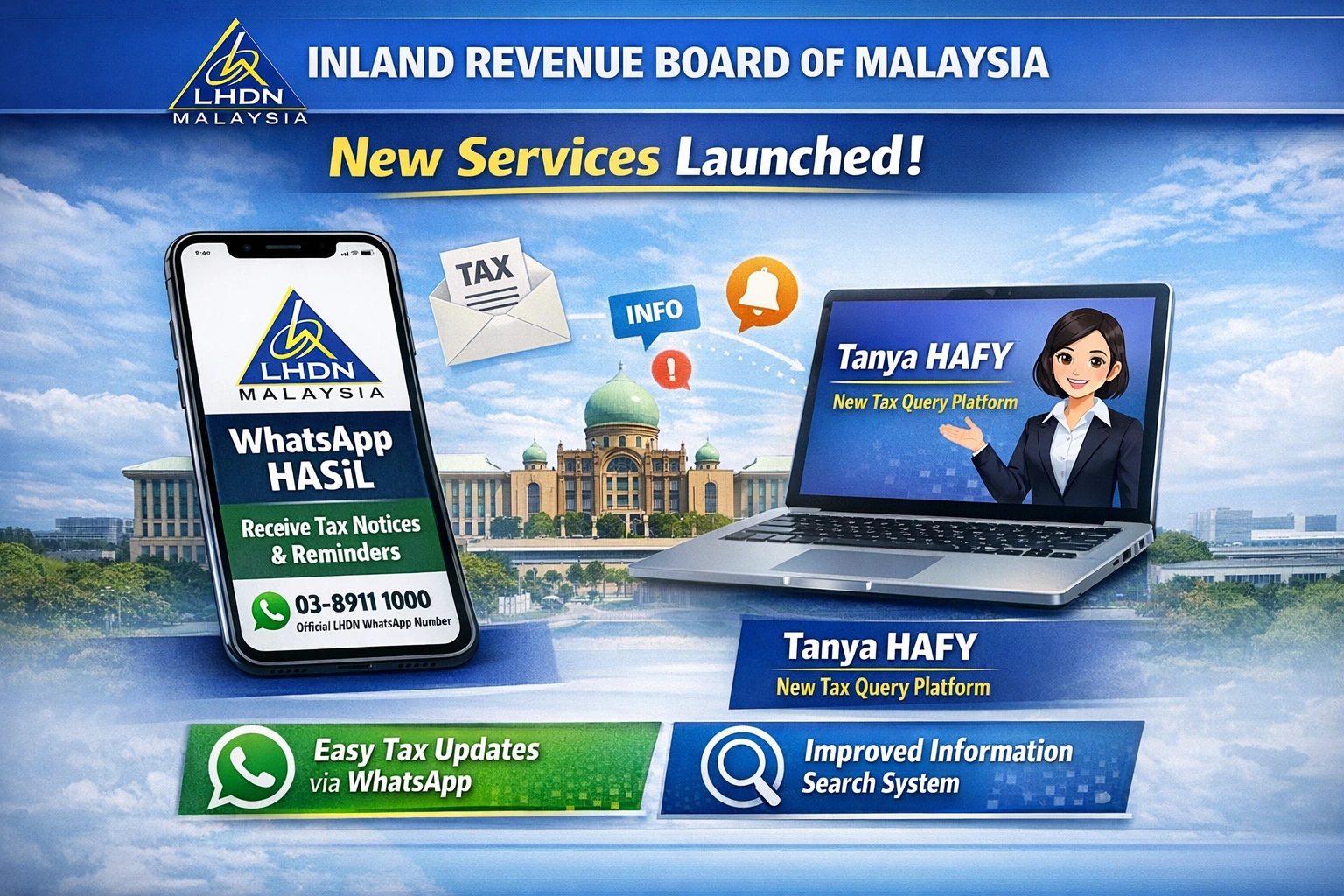
The LHDN believes that launch of WhatsApp HASiL and Tanya HAFY applications will increase taxpayers' access to important information and bring them greater convenience.
The Inland Revenue Board of Malaysia (LHDN) launches a WhatsApp application and a new tax inquiry platform
Putrajaya: The Inland Revenue Board of Malaysia (LHDN) today launched a WhatsApp application and a new information search platform to facilitate taxpayers' tax affairs.
Summary
The LHDN has launched a WhatsApp application and a new information search platform to facilitate taxpayers' tax affairs.
Taxpayers can use the newly launched WhatsApp application with their registered mobile phone number to receive tax notices, payment reminders, and overdue payment notices.
The launch of the WhatsApp HASiL application and Tanya HAFY platform is expected to increase Malaysian taxpayers' access to important information and bring them greater convenience.
The Inland Revenue Board of Malaysia announced today that taxpayers can now receive tax notices, payment reminders, outstanding payment notices, and tax compliance information via a newly launched WhatsApp application using their registered mobile phone numbers.
The statement noted, "The WhatsApp account used by the Inland Revenue Board of Malaysia is the Inland Revenue Board of Malaysia, and the phone number is 03-8911 1000."
Simultaneously, the Inland Revenue Board announced that an improved query platform, Tanya HAFY, will replace the Tanya@HKC platform previously used on its official website.
The statement said, "This self-service information query service is more systematic, accurate, and efficient."
The Inland Revenue Board believes that the launch of WhatsApp HASiL and Tanya HAFY application will increase taxpayers' access to important information and bring them greater value.

Putrajaya CORPORATION informs users that it is implementing work to upgrade to an artificial intelligence-based traffic management system.
Putrajaya is currently in the transition phase to an AI traffic light system
Putrajaya CORPORATION informs users that it is implementing work to upgrade the traffic management system in Putrajaya to an artificial intelligence-based system.
With this step, Putrajaya is targeting a smoother traffic flow compared to the current one.
For the system in question, VA cameras will be used to perform video analysis, thus detecting the number of vehicles, and accurately measuring the waiting queue distance.
Next, the system will adjust the green light time based on current traffic, in addition to predicting traffic patterns.
The system will also standardize the display of traffic lights to create a non-stop traffic flow in Putrajaya.
With this step, traffic flow is expected to be smoother, thus reducing road congestion.
Currently, a temporary transition phase is being implemented, and it is expected to be upgraded to an AI-based system in the near future.
At present, the implementation timeline has not been shared.
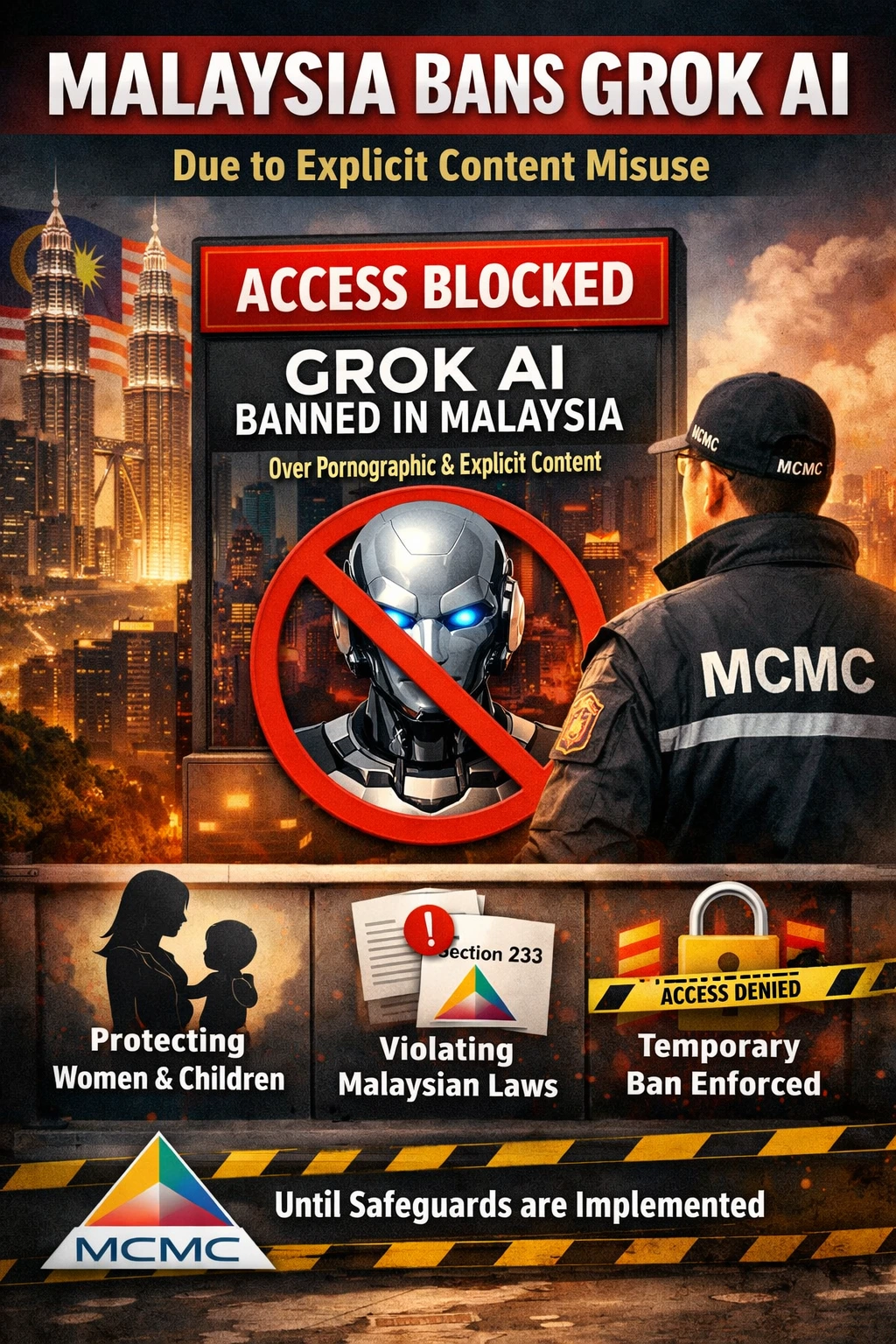
MCMC said action was taken following repeated abuse of Grok to generate pornographic and sexually explicit content.
[LATEST] Malaysia orders temporary ban on Grok effective today
PUTRAJAYA: The Malaysian Communications and Multimedia Commission (MCMC) has ordered a temporary ban on access to Grok's artificial intelligence (AI) for users in Malaysia effective today.
AI Summary
- MCMC has ordered a temporary ban on access to Grok's artificial intelligence platform in Malaysia due to misuse for pornographic and sexually explicit content.
- The measure was taken after X Corp. and xAI LLC failed to comply with technical protection and content monitoring requirements in accordance with Malaysian law.
- The access ban will continue until effective protection measures are implemented to prevent harmful content, especially those related to women and children.
In a statement today, MCMC said action was taken following repeated abuse of Grok to generate pornographic and sexually explicit content.
"The action was also taken following extremely obscene and sexually explicit content and non-consensual manipulation of images including content involving women and children, despite regulatory action being taken against X Corp. and xAI LLC," statement said.
According to MCMC, it had issued notices to X Corp. and xAI LLC on Jan 3 and 8 demanding, among other things, implementation of technical protection measures.
The demands also included effective content supervisors to prevent AI-generated content that may violate Malaysian laws, including Section 233 of the Communications and Multimedia Act 1998.
"However, responses submitted by X Corp. on Jan 7 and 9 only focused on user-initiated reporting mechanism and failed to address inherent risks that arise from design and operation of AI tool," statement said.
Following this, MCMC found that this was insufficient to prevent harm and ensure compliance with law.
"This restriction is imposed as a necessary precautionary measure while legislative and regulatory processes are ongoing.
"The restriction on access to Grok will remain in place until effective safeguards are in place, particularly to prevent content involving women and children," statement said.
MCMC remains open to engaging with X Corp. and xAI LLC subject to demonstrable compliance with Malaysian law.
"The public is urged to report harmful online content to MCMC immediately and, if necessary, to Royal Malaysian Police," statement said.

Zulkifli spoke at the E-Braille Handover Ceremony for Visually Impaired Quran teachers at a hotel in Kuala Lumpur on Thursday.
eBraille device makes it easier for visually impaired people to access the Quran, religious knowledge
KUALA LUMPUR: Locally produced eBraille devices open a new chapter in teaching of Quran for the visually impaired, thus expanding their access to religious knowledge and knowledge.
AI Summary
- Locally produced eBraille devices provide access to religious knowledge for the visually impaired with greater ease and lightness compared to conventional Braille Qurans.
- This initiative was announced by the Minister in the Prime Minister's Department (Religious Affairs), Zulkifli Hasan, who stated that that eBraille devices, are a result of innovation by a local company, are an innovative and effective step for visually impaired teachers.
- The handover ceremony for 10 eBraille devices was held together with the Malaysia Islamic Propaganda Foundation (YADIM) and the Federal Territory Islamic Religious Council (MAIWP).
This initiative was announced by the Minister in the Prime Minister's Department (Religious Affairs), Zulkifli Hasan, who stated that that eBraille devices, result of innovation by a local company, are an innovative and effective step for visually impaired teachers.
The handover ceremony for 10 eBraille devices was held together with the Malaysia Islamic Propaganda Foundation (YADIM) and the Federal Territory Islamic Religious Council (MAIWP) to increase access to religious knowledge for the visually impaired as well as strengthen the teaching of the Quran through the latest technology.
Minister in the Prime Minister's Department (Religious Affairs) Zulkifli Hasan said that the device, an innovation from Edote Sdn Bhd, could solve the main constraints of teachers with visual impairments, who previously had to use conventional Braille Qurans that were heavier and larger.
"This is a result of the creativity of Malaysians themselves who offer cheaper prices, and are even ahead of the curve, and it is a very good innovation.
"Previously, they (the visually impaired) used a Braille Quran that weighed 10 kilograms and had six volumes. "But this time they only used eBraille devices, only less than one kilogram," he told reporters after officiating the eBraille Device Use Workshop and eBraille Device Handover Ceremony for Visually Impaired Quran Teachers here on Thursday.
The ceremony was organised jointly by the Malaysia Islamic Dakwah Foundation (YADIM), the Federal Territory Islamic Religious Council (MAIWP) and Edote Sdn Bhd.
According to Zulkifli, a total of 10 eBraille devices were handed over at the ceremony, with two of them placed at Besi Mosque or Tuanku Mizan Zainal Abidin Mosque, Putrajaya and the Jamek Mosque here to continue lectures using the innovation.
"We want to produce more Quran teachers who can use this eBraille so that visually impaired children can access religious knowledge and the Quran in particular," he said.
Meanwhile, YADIM President Datuk Hasan Bahrom in his speech said that a total of 20 visually impaired Quran teachers and their companions had participated in the workshop, which aimed to strengthen the teaching methods of the Quran through the latest technology.
For To make the initiative a success, he said RM90,000 had been allocated by the Prime Minister's Department (Religious Affairs) in response to Prime Minister Datuk Seri Anwar Ibrahim's call for government agencies to fully utilize technology in serving the people.
"This measure is also in line with the Religious Agencies' Action Plan for Muslim Disabled Persons 2024-2028 which places clear emphasis on religious education and rights of disabled persons to perform worship as Muslims.
"YADIM will continue to expand, monitor and improve such programs, including through collaboration with the media, non-governmental organizations and the private sector. It is hoped that this effort will empower disabled persons in the national dakwah development agenda," he said.
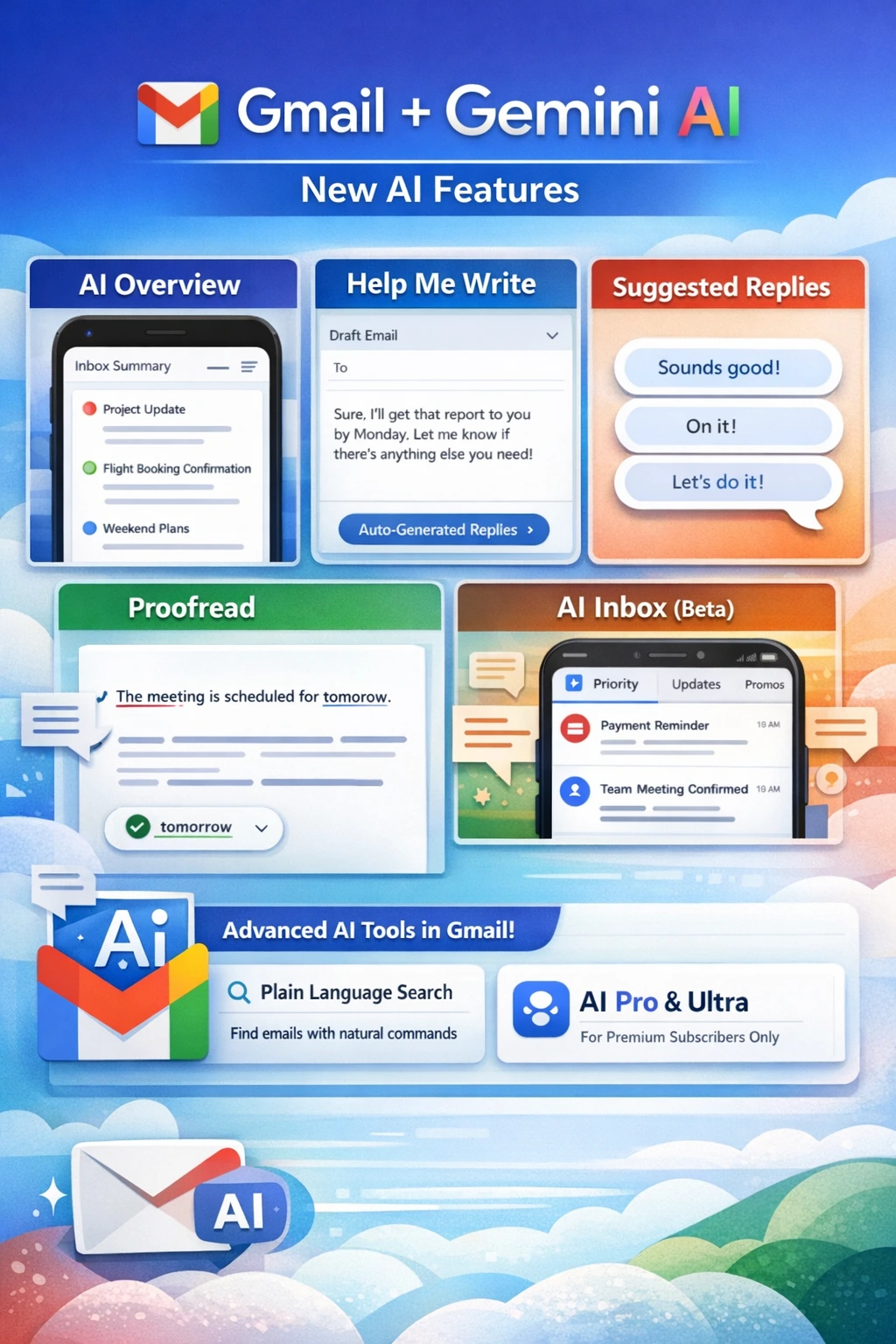
Google announced the integration of Gemini artificial intelligence (AI) into Gmail with new features such as AI Overview, Help Me Write, Suggested Replies, Proofread, and AI Inbox.
Gmail now integrates Gemini with new AI features
Google announced the integration of Gemini artificial intelligence (AI) into Gmail with several new features including AI Overview, Help Me Write, Suggested Replies, Proofread, and AI Inbox.
AI Summary
- Google announced the integration of Gemini artificial intelligence (AI) into Gmail with new features such as AI Overview, Help Me Write, Suggested Replies, Proofread, and AI Inbox.
- AI Overview provides a summary of emails in the inbox, while Help Me Write writes replies automatically.
- Suggested Replies, Proofread, and AI Inbox provide additional convenience for Gmail users.
AI Overview works to provide a summary of emails in inbox, including subject and content of long emails. This feature is offered free to all users.
For Google AI Pro and Ultra subscribers, Gemini allows email searches using plain language commands such as "search for emails about a trip to Bamboo River last year" and results are displayed immediately.
Additionally, the Help Me Write feature automatically writes replies based on the email you receive, while Suggested Replies is an improvement over Smart Replies with quick reply suggestions.
Both features are free, but Proofread, which checks grammar and spelling, requires a Google AI Pro or Ultra subscription.
The AI Inbox feature filters emails so users can focus on important messages like payment notices or meeting confirmations.
Emails from people they interact with frequently are also prioritized.
AI Inbox is currently in beta and is only available to select users.
Quick Facts: Quick Answers From AI
Q: What are the key features offered by Gemini's artificial intelligence (AI) integration into Gmail?
A: Key features include AI Overview, Help Me Write, Suggested Replies, Proofread, and AI Inbox.
Q: How does AI Overview work in Gmail?
A: AI Overview provides users with a summary of emails in their inbox, including the subject and body of long emails.
Q: Are Help Me Write and Suggested Replies free?
A: Yes, both Help Me Write and Suggested Replies are free to all Gmail users.
Q: Who needs a Google AI Pro or Ultra subscription to use the Proofread feature?
A: Users who want to use the Proofread feature that checks grammar and spelling need to subscribe to Google AI Pro or Ultra.

OpenAI introduced a special ChatGPT Health tab to answer health and fitness questions, emphasizing it's not for medical or diagnostic use.
OpenAI introduces ChatGPT Health - Making it easier for you to understand your health
At the same time, OpenAI also emphasizes that it is not intended for medical or diagnostic use.
AI Summary
- OpenAI introduced a special ChatGPT Health tab to answer health and fitness questions.
- This tab is currently being tested and will be expanded later without using user data for model training.
- Users can upload health records and connect health apps without medical or diagnostic purposes.
One of the most frequently asked and referred questions to ChatGPT is various health and fitness-related questions.
Now, in a special focus on it, OpenAI has introduced a special tab called ChatGPT Health.
Currently, this feature is being tested in a limited way and is expected to be expanded to everyone soon.
Through the tab, it can answer various health-related questions, analysis and related. Users can also upload their health records, in addition to connecting apps such as MyFitnessPal and Apple Health.
OpenAI also emphasized that they will not use any user data in training their models, and that the tab will have additional privacy protections.
At the same time, OpenAI also emphasized that it is not intended for medical or diagnostic use.
It is unknown whether users will be comfortable uploading health and related records to ChatGPT service or not.
As always, the public is advised to protect your privacy, and not arbitrarily upload personal data to any service, and to consult a medical expert for various health-related matters.

WhatsApp is updating the group function with several new features to reduce confusion and make event management easier.
WhatsApp adds name tags in groups and event reminders
Users can now create events in groups, set early reminders for invitations, and easily convert text to stickers.
AI Summary
- WhatsApp is updating the group function with new features including name tags to make event management easier and reduce confusion.
- Users can now create events in groups, set early reminders for invitations, and easily convert text to stickers.
- This latest WhatsApp update has been launched for the iOS and Android operating systems, allowing users to take advantage of the new features.
Among the features are name tags, which allow users to set an identifying name such as "Evelyn's Dad" in a child's school group, to make it easier for members to recognize their real identities.
In addition, users can now create events in groups and set early reminders for invitations, ensuring everyone is present at the appointed time or join a teleconference call.
The third feature allows users to convert text to stickers by typing in Sticker Search, as well as add created stickers to personal packs.
All these features are available through the latest update for iOS and Android.
Quick Facts: Quick Answers From AI
Q: What new features has WhatsApp introduced in its latest update to the group function?
A: WhatsApp introduced the feature of name tags, creating events, and converting text to stickers in its latest update to the group function.
Q: What are the advantages of the name tag feature in WhatsApp groups?
A: The name tag feature allows users to set an introductory name such as "Evelyn's Dad" in a child's school group, making it easier for members to identify their real identities.
Q: How can users ensure that all group members are present at the designated time through the latest update of WhatsApp?
A: Users can create events in the group and set advance reminders for invitations, ensure everyone is present at the designated time, or join a teleconference call.
Q: What is the Sticker Search feature introduced in the latest update of WhatsApp?
A: The Sticker Search feature allows users to convert text to stickers by typing in Sticker Search, as well as add created stickers to personal packs.
Q: Which platforms can get the latest update for these WhatsApp features?
A: The latest update for these WhatsApp features is already available for iOS and Android users.
PUTRAJAYA - The MyDigital ID platform will be used as a single login for Malaysians who use the National Integrated Immigration System (NIISe) mobile application.
MyDigital ID to be used for NIISe mobile app starting January 15
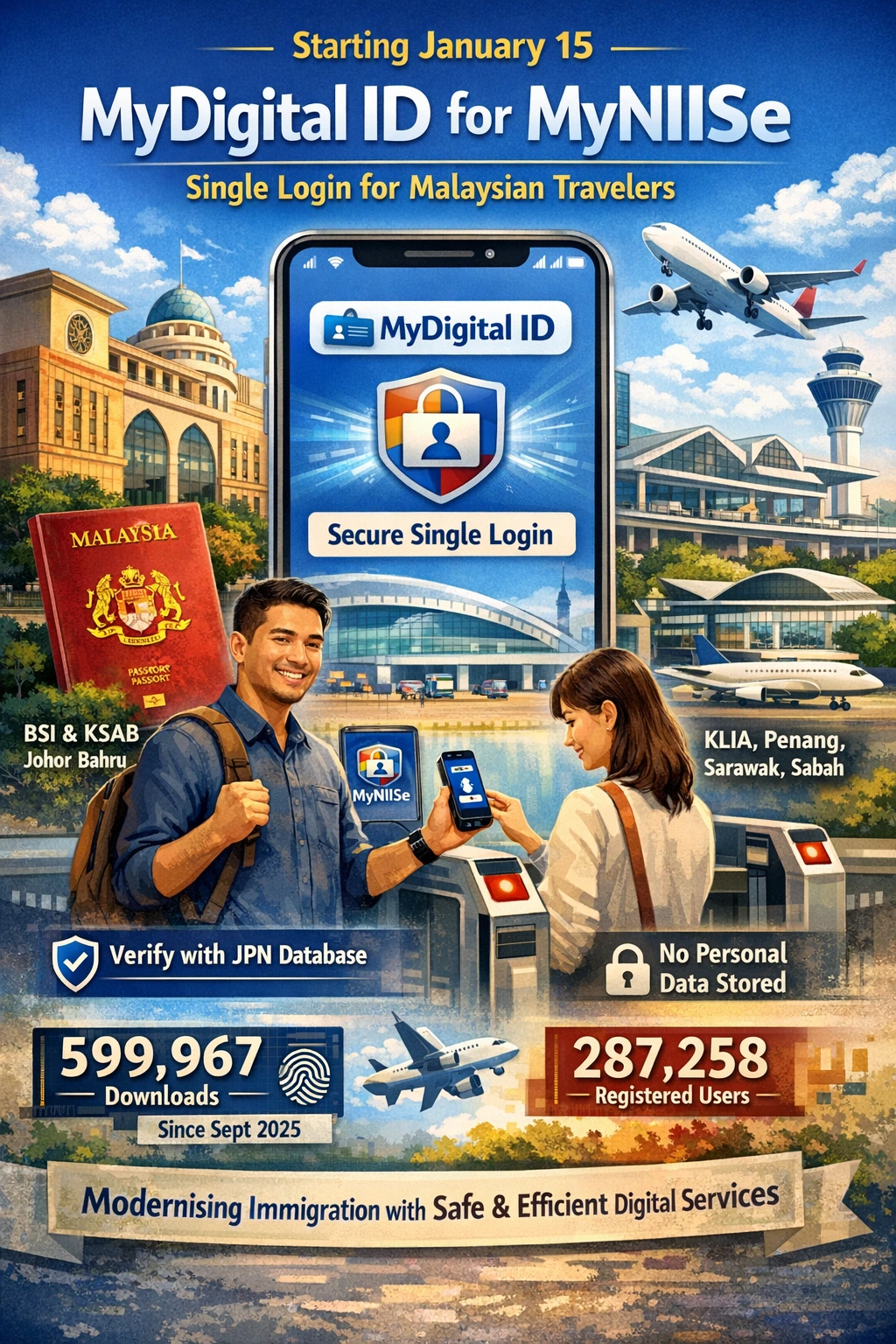
PUTRAJAYA - The MyDigital ID platform will be used as a single login for Malaysians who use the National Integrated Immigration System (NIISe) mobile application to pass through the country's entry points starting January 15.
AI Summary
- MyDigital ID to serve as single login for NIISe mobile app from January 15, 2026
- Enhances security by verifying identity through National Registration Department database
- MyNIISe app already in use since September 2025, with nearly 600,000 downloads
The Ministry of Home Affairs (KDN) said in a statement that it functions to verify the user's identity accurately and securely through the National Registration Department (JPN) database, without storing the user's personal data.
According to him, this approach increases the security of digital transactions and simplifies the user experience through a single login without having to remember multiple passwords.
"Malaysian citizens aged 18 and above are advised to download and register for the MyDigital ID application before using MyNIISe.
"For foreign national users, the existing login method for the MyNIISe application will continue to be used without any changes," he said today.
The Ministry of Home Affairs said the MyNIISe application has been in use since September 22, 2025 to enter the country's entry points at the Sultan Iskandar Building (BSI) and Sultan Abu Bakar Complex (KSAB), Johor Bahru, Johor.
He said the application will be expanded in stages to KLIA International Airport Terminals 1 and 2; Bayan Lepas, Kuching and Kota Kinabalu.
"As of December 30, 2025, MyNIISe has recorded 599,967 downloads with 287,258 registered users.
"The implementation of MyDigital ID in MyNIISe reflects the government's continued commitment to modernising public services through safe, efficient and people-focused digitalisation," he said.

A man has come to the rescue of several individuals after successfully recovering application subscription fees that were accidentally charged.
How to Get Refunds for Accidental Apple Subscriptions
He shared simple steps to request a refund and cancel a subscription, thus helping other users who are facing the same situation.
AI Summary
- Step-by-step guide to request refunds for accidental Apple subscriptions
- How to cancel subscriptions to prevent future charges
- Important tip about free trials and subscription management
He said that these steps are specifically for iPhone users who are automatically charged by Apple.
How to request a refund for an Apple subscription:
- Go to Settings
- Press the iCloud name
- Select Media & Purchases
- Press View Account
- Select Purchase History
- Press the item you want to refund
- Select Request Refund
- Safari will open, press Request a Refund – I did not intend to renew a Subscription
- Press Submit
According to him, if there is no Request Refund option, users can select Report a Problem as an alternative.
How to cancel a subscription:
- Go to Settings
- Press the iCloud name
- Select Subscription
- Press the application you want to cancel
- Select Cancel Subscription
Additionally, an important tip for iPhone users is to immediately cancel the subscription as soon as you register for a free trial, because Apple will not automatically charge after the trial period ends.
"Even if you cancel early, the free trial can still be used until the expiration date," he explained.
The method received positive reactions from netizens who admitted that the sharing was very helpful and some shared their success in getting their claims back.

PUTRAJAYA: The Malaysian Communications and Multimedia Commission (MCMC) is conducting an investigation into online harms occurring on the X platform.
MCMC investigating AI misuse on X platform, will summon platform representatives
MCMC in a statement today informed that it is taking public complaints seriously regarding the misuse of AI on the X platform.
AI Summary
- MCMC is conducting an investigation into the misuse of AI on the X platform that produces harmful content, particularly the manipulation of images of women and children.
- Misuse of harmful content under Section 233 of the AKM is an offence; MCMC will investigate X users suspected of violating the law.
- MCMC stresses that online platforms must comply with Malaysia's online safety standards and encourage the public and victims to report harmful content to the authorities.
MCMC in a statement today informed that it is taking public complaints seriously regarding the misuse of AI on the X platform, particularly involving the manipulation of images of women and children to produce indecent, obscene or harmful content.
"The production or dissemination of harmful content is an offence under Section 233 of the Communications and Multimedia Act 1998 (CMA), which among others prohibits the misuse of network services or applications to transmit obscene, obscene or indecent content.
"MCMC will commence an investigation into X users suspected of violating the CMA," the statement said.
MCMC also informed that with the enforcement of the Online Safety Act 2025 (ONSA), all online platforms and licensed service providers are required to take preventive measures to curb the dissemination of harmful content, including obscene, indecent content and child sexual abuse material.
"Although X is not a licensed service provider at this time, the platform is still required to comply with online safety standards in Malaysia and is responsible for preventing the dissemination of harmful content," the statement said.
MCMC urges all platforms accessible in Malaysia to implement protective measures in line with Malaysian laws and online safety standards, particularly with regard to AI functions, chatbots and image manipulation applications.
The public and affected victims are advised to report the harmful content to the platforms involved and to file reports to the Royal Malaysian Police (PDRM) and MCMC, including through the commission's online complaints portal.

TikTok introduces GamePlan specifically for sports teams, leagues, and broadcasters to increase fan engagement and business results.
Get to know GamePlan for sports fans
STUDY shows 42 percent of users are more likely to watch live games after watching sports content on TikTok.
AI Summary
- Study shows 42% of users are more likely to watch live games after watching sports content on TikTok, encouraging live engagement.
- TikTok introduces GamePlan specifically for sports teams, leagues, and broadcasters to increase fan engagement and business results.
- Through GamePlan, fans can follow official accounts, buy tickets, and create their own content, while helping partners leverage the TikTok sports community.
Therefore, TikTok introduces GamePlan specifically developed for sports teams, leagues, and broadcasters to increase engagement and generate business results in real time.
GamePlan allows fans to follow official accounts, check schedules and standings, buy tickets, add games to the calendar, and create their own content.
In addition, it helps partners leverage the TikTok sports community through broadcast campaigns and fan content incentives.
The platform also provides real-time analytics dashboards to understand fan behavior and popular conversations.
The partnership with DAZN during the 2025 FIFA Club World Cup saw TikTok's followers grow by nearly 200 percent, with over 500,000 fans continuing their experience on the DAZN platform.
GamePlan is now available to users worldwide.
Quick Facts: Quick Answers From AI
Q: What is GamePlan that TikTok is introducing to sports teams, leagues, and broadcasters?
A: GamePlan is an initiative specifically developed to increase user engagement in sports, allowing fans to follow official accounts, check schedules, buy tickets, add matches to the calendar, and create their own content.
Q: How does GamePlan help partners in the TikTok sports community?
A: GamePlan helps partners leverage the TikTok sports community through broadcast campaigns and fan content incentives.
Q: What are the benefits TikTok is providing through GamePlan during the partnership with DAZN during the 2025 FIFA Club World Cup?
A: The partnership with DAZN during the 2025 FIFA Club World Cup saw a nearly 200 percent increase in TikTok followers and over 500,000 fans continuing the experience on the DAZN platform.

The latest vintage list includes the 13-inch MacBook Air, Apple Watch Series 5, and iPhone 11 Pro.
Apple categorizes MacBook Air with Intel chip, iPhone 11 Pro as obsolete
APPLE has a list of products that are categorized as obsolete, which is after a product has been out of the market for more than five years.
AI Summary
- Apple updates the list of obsolete products, making it easier for users to identify product support.
- The latest vintage list includes the 13-inch MacBook Air, Apple Watch Series 5, and iPhone 11 Pro.
- Users interested in the products are advised to check the end of support first.
This step makes it easier for users to identify whether their products are still supported or not.
Recently, Apple updated the vintage list with several new products. Among them is the last 13-inch MacBook Air powered by Intel chips, before the series switched to Apple's own M chips.
In addition, the Apple Watch Series 5 and iPhone 11 Pro have also been added to the list.
Therefore, if you intend to buy these models in the near future, it is best to check first and be prepared for the end of support for them.

OpenAI is developing a new AI audio model for more human-like conversations, allowing virtual assistants to communicate two-way continuously. -File photo
OpenAI develops new AI audio model, more natural conversations expected this March
This year is expected to see the launch of a variety of native artificial intelligence (AI)-based devices and smart glasses that are controlled entirely through voice commands.
AI Brief
- A variety of native AI devices and smart glasses will be launched this year, controlled entirely through voice commands for more natural interactions.
- OpenAI is developing a new AI audio model for more human-like conversations, allowing virtual assistants to communicate two-way continuously.
- OpenAI's first physical products will rely on voice commands, possibly in the form of smart earphones, smart glasses, or a screen-free smart pen for a more user-friendly use.
If you regularly use Siri or Gemini, you must have noticed that the conversation modes of these two virtual assistants still sound robotic, not like real humans.
According to a report by The Information, OpenAI is currently developing a new AI audio model to enable more natural conversations. The new model is expected to launch around March with a new architecture, led by Kundan Kumar, who previously worked at Character.AI Inc.
The technology not only promises smoother interactions, but also allows OpenAI's virtual assistants to communicate two-way continuously. This effort is being made because OpenAI's first physical product will rely entirely on voice commands. Reports say it could come in the form of screenless smart earphones, smart glasses or smart pens. For sure, it won't have a screen that requires users to type.
Quick Facts: Quick Answers From AI
Q: What is OpenAI expected to do to make conversations between users and virtual assistants more natural?
A: OpenAI is expected to launch a new audio AI model to make conversations between users and virtual assistants more natural.
Q: Who is leading the development of the new audio AI model at OpenAI?
A: The development of the new audio AI model at OpenAI is led by Kundan Kumar, who previously worked at Character.AI Inc.
Q: What kind of first physical product is OpenAI expected to release?
A: The first physical product from OpenAI is expected to be in the form of screenless smart earphones, smart glasses or smart pens, without the need for users to type.